What plants tell us — Botanical notes no. 1
Brush against a nettle once and you’ll remember it. Your skin heats up, little bumps appear, and you’re ready to condemn the whole plant. Yet beneath those serrated leaves lies a world teeming with life, a history of textile making and an invitation to look more closely.
A tiny injection mechanism
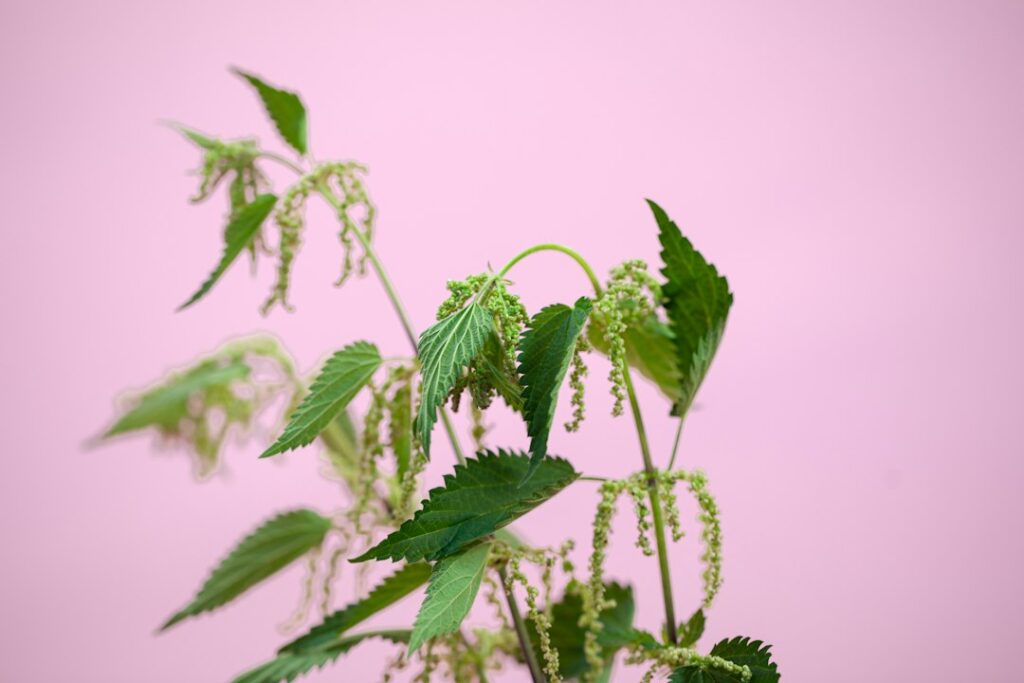
Common nettle (Urtica dioica) has stinging hairs with brittle tips that break on contact. The hairs can then deliver an irritating liquid into the skin. Histamine, acetylcholine and serotonin are among the substances researchers have studied. The old explanation that attributed the sting to formic acid alone is incomplete. The raised bumps are a local inflammatory reaction. Holding your breath offers no protection. There is little evidence that vinegar helps, and it may irritate the skin further. Gently rinse the area and apply a cold compress.
A report from the French Central Horticultural Society in 1874 records an observation by Charles Naudin in Collioure. After a strong, dry wind, some small nettles (Urtica urens) reportedly lost their sting for a time. One suggestion was that the hairs had dried out. This intriguing historical account came from an observation in the field.
A nettle lookalike with white flowers
White dead-nettle (Lamium album) has leaves that resemble those of stinging nettles and belongs to the mint family. Its flowers are white and it lacks the stinging hairs of a true nettle. Lookalikes make it important to identify a plant precisely before foraging.
A nursery for butterflies and much more
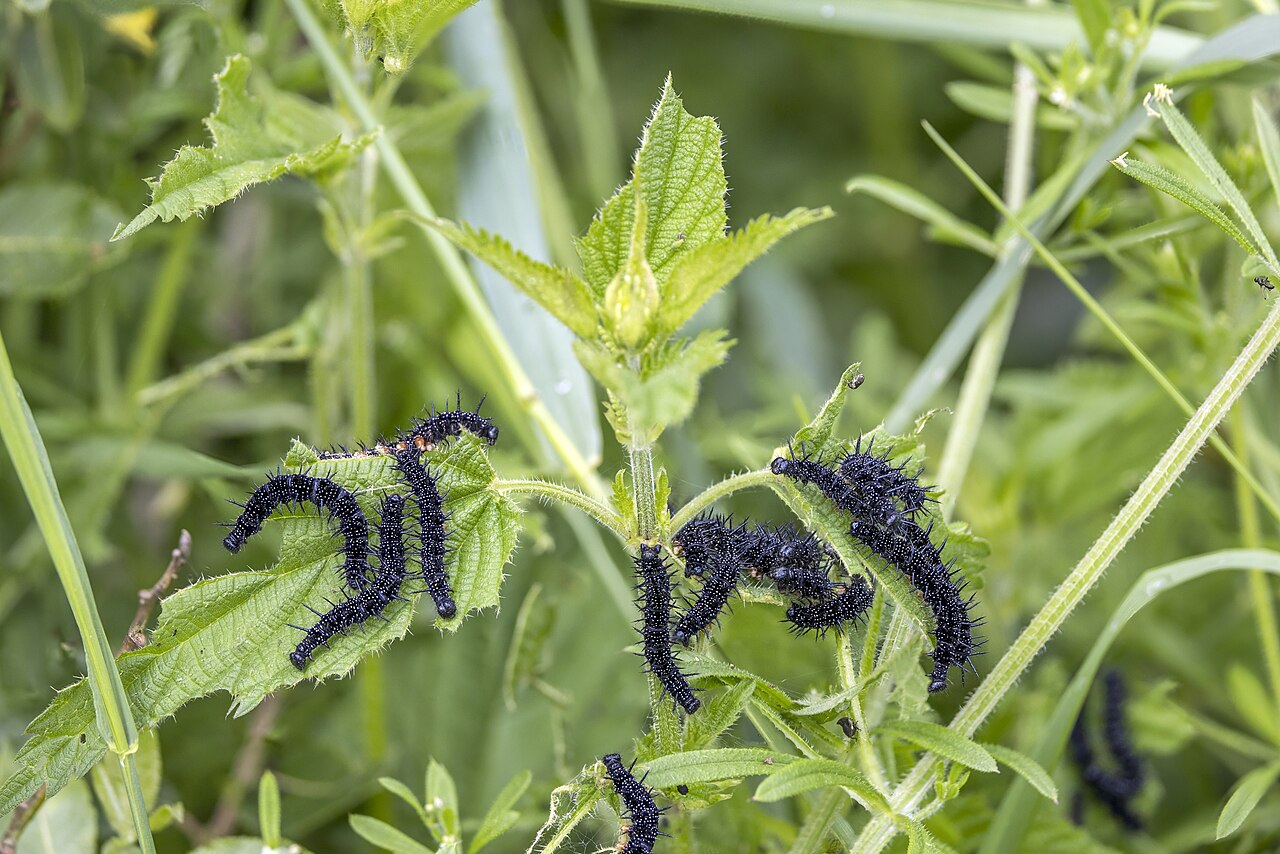
Peacock, small tortoiseshell and red admiral butterflies all lay eggs on nettles, whose leaves feed their caterpillars. Aphids, ladybirds, true bugs and other beetles also live among the stems. Their relationships are complex, and a patch of nettles alone can do only so much to control pests in the vegetable garden.
Common nettle is pollinated mainly by the wind. Adult butterflies need nectar, so it helps to grow nectar-rich flowers nearby. A patch of nettles alongside a variety of flowering plants makes a richer habitat.
Male and female plants
The name dioica recalls that common nettle usually bears male and female flowers on separate plants. Small nettle (Urtica urens) can carry both kinds of flower on the same plant. It’s something to look for with a magnifying glass while keeping clear of the hairs.
Victor Hugo and the ‘weeds’
In Les Misérables, Victor Hugo gives the character Madeleine something to say as he comes across some uprooted nettles. The scene asks us to reconsider how we look at overlooked plants and, by extension, at people. It invites us to ask what we destroy simply because we know so little about it.
Watching a garden grow
Nettles often thrive in nutrient-rich soils and may grow near hedges, former settlements and cool or damp places. Their presence is one clue to what the soil is like. On the Astrée estates, let’s start by locating existing patches, photographing their visitors and returning a few weeks later. Before cutting them back, let’s check for caterpillars.
Our invitation. Choose a small patch of nettles, take a photograph and watch the insects without disturbing them. Come back four to six weeks later. Living heritage often begins with a closer look.
Further reading
- Ensikat et al., “Distribution, Ecology, Chemistry and Toxicology of Plant Stinging Hairs”, Toxins (2021), DOI 10.3390/toxins13020141.
- Royal Horticultural Society, guidance on caterpillar food plants and nectar-rich flowers.
- Victor Hugo, Les Misérables, Part One, Book V.
- French Central Horticultural Society, proceedings of 12 March 1874, observation by Charles Naudin.
Les Chevaliers de l’Astrée — Receive · Care for · Pass on. We care for what will outlive us.
Your voice matters
Respond to this Echo
An observation, experience or question? Share it here. Comments are reviewed before publication.
No published comments yet. You can start the conversation.